Four layers, and a rule for each of them.
A presence device is easy to demo and hard to make trustworthy. The engineering that matters is not the display — it is what governs the memory behind it.
Capture
Guided sessions record voice, stories, photographs and video with a consent statement attached at the point of capture. Nothing enters a vault without it.
Vault
Material is written into a family-owned memory vault as weighted seeds. The family can view, export, forget or audit it at any time, and deletion is real deletion.
Alaya engine
Retrieval, identity assembly, affect shaping, dual verification and four guardrail passes run on every single turn before a word is spoken aloud.
Presence
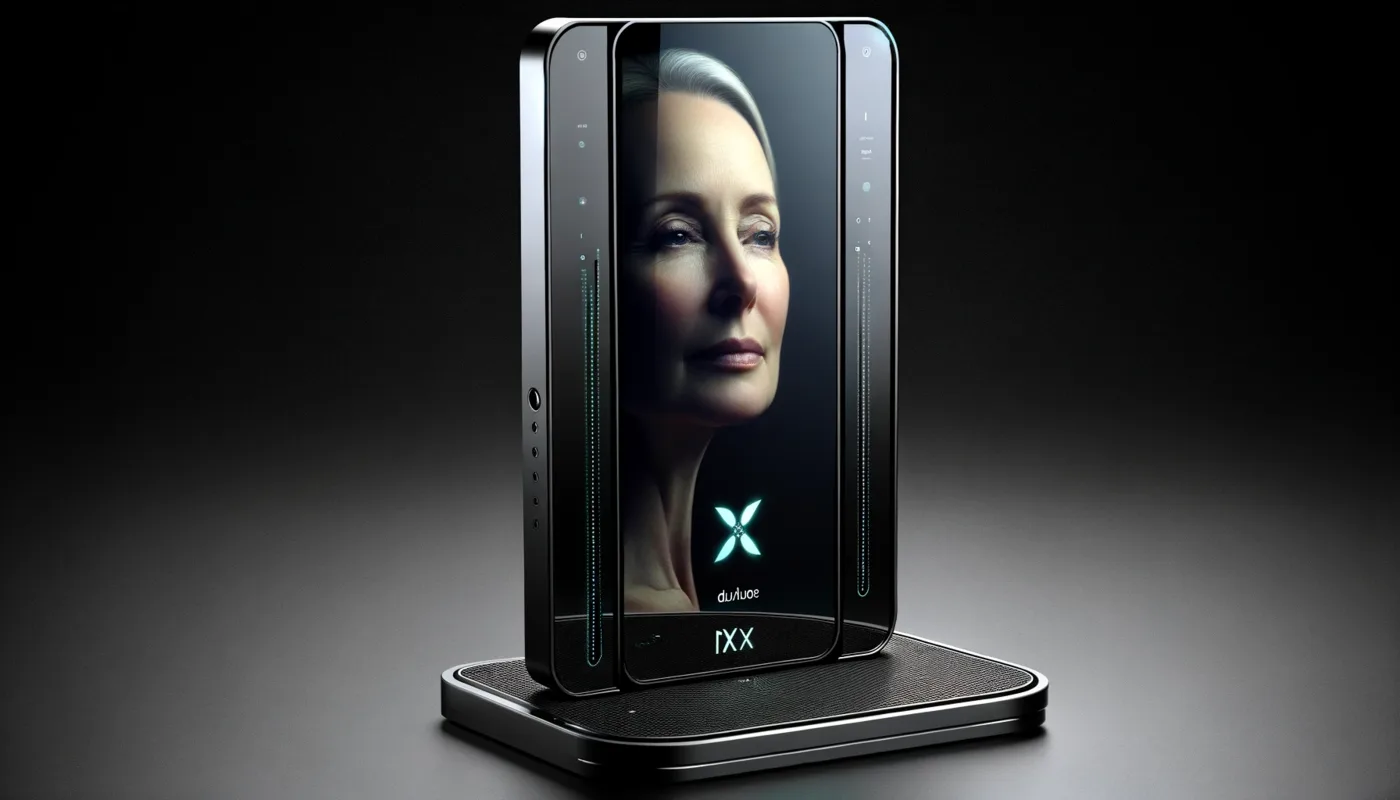
The result is rendered as a face and a voice in the room — flat HD on X1, glasses-free volumetric on M, any surface on Avatar.
Alaya AI is the part that decides what gets said.
Alaya AI is the open-source cognitive architecture inside every SoulHub device: a Yogācāra-informed digital-human system in which memory, identity, affect, self-verification, guardrails and governance are separate, testable layers rather than one opaque prompt.
 Twelve stages per turn
 Four commitments we design against.
Consent is a data structure, not a checkbox
A vault can only be created with a recorded consent statement from the person themselves, or documented authorisation from legal next of kin. That record is stored with the vault, versioned, and carried to every device the vault appears on. It cannot be edited away.
The vault belongs to the family
Recordings, photographs, stories and derived seeds live in one family-owned vault. It can be exported in full, in an open format, at any time. Deletion is real deletion, not a hidden flag. SoulHub Labs does not sell vault content and does not train models for other customers on it.
Grounded recall, not plausible fiction
Retrieval is scored against the vault by importance and recency, and the generated response is checked twice — once by the system against its own reasoning, once by an independent witness pass — before a consistency guard compares it to the identity profile.
Designed against dependence
A wellbeing stage watches for dependency and crisis language and adds grounding rather than warmth. The system does not claim sentience, love or human identity, and it points toward real human support rather than absorbing the need.
Display and audio
| HD panel (X1) | 11.5-inch LTPS at 1200 nits, colour-tuned for skin tones in low-light domestic rooms, with an anti-glare stack for daylight. |
|---|---|
| Light field (M) | A glasses-free 3D stack renders many simultaneous views, preserving horizontal parallax across the width of a room and across multiple viewers. |
| Spatial audio | Four drivers on X1 and a tracked 360-degree field on M place a voice at the height and position the presence appears to occupy. |
| On-device inference | Wake word, voice capture and playback run locally. A local-only mode for the full conversation model is on the roadmap for SoulHub M. |